
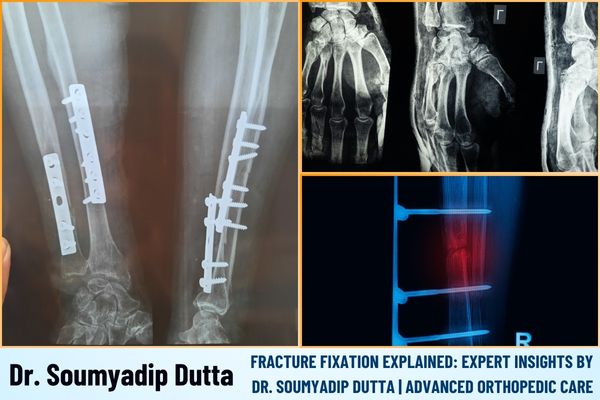
Fracture Fixation: Ensuring Proper Bone Healing with Advanced Orthopedic Care
By Dr. Soumyadip Dutta
Fractures are one of the most common orthopedic injuries, often caused by trauma, falls, sports accidents, or weakened bones. Proper treatment is essential to ensure that the bone heals in the correct position and regains its strength. This is where fracture fixation plays a vital role. With modern surgical techniques, patients can recover faster, regain mobility sooner, and reduce long-term complications.
In this article, we explore what fracture fixation is, when it is needed, and how expert orthopedic care—led by specialists like Dr. Soumyadip Dutta—ensures safe and successful recovery.
What Is Fracture Fixation?
Fracture fixation refers to the process of stabilizing broken bones using either internal or external devices. These support structures hold bone fragments in place, maintain proper alignment, and promote natural healing.
Types of Fracture Fixation:
1. Internal Fixation
This method involves placing devices inside the body.
Common options include:
- Plates and screws
- Intramedullary nails (rods)
- Wires and pins
Internal fixation ensures stable alignment and early mobilization, which is crucial for joints like the hip, wrist, or ankle.
2. External Fixation
Here, rods and pins remain outside the body, connected to the bone through small incisions.
This method is commonly used in:
- Severe open fractures
- Polytrauma cases
- Fractures with high infection risk
When Is Fracture Fixation Necessary?
While some fractures heal well with casting or splints, others require surgical fixation.
Fracture fixation becomes essential when:
- Bones are displaced or misaligned
- The fracture involves joints
- Bones are shattered (comminuted fracture)
- There is an open (compound) fracture
- The patient needs early mobility
- Conservative treatment fails
Specialists like Dr. Soumyadip Dutta evaluate each case carefully, considering age, bone quality, fracture pattern, and patient lifestyle before choosing the right approach.
The Procedure: What Patients Can Expect
1. Pre-Surgical Evaluation
- X-ray, CT scan, or MRI
- Assessment of swelling, neurovascular status, and soft tissue injury
- Planning the fixation method
2. Surgical Fixation
The procedure is performed under regional or general anesthesia.
The surgeon realigns the bone fragments and places the fixation device with precision.
3. Postoperative Care
- Pain management
- Immobilization when needed
- Infection prevention
- Physiotherapy guidance
- Regular follow-up X-rays to assess healing
Recovery After Fracture Fixation
Recovery duration depends on the fracture type and patient factors. With proper rehabilitation:
- Most fractures heal in 6–12 weeks
- Patients begin physiotherapy early
- Strength and mobility gradually return
- Long-term outcomes are excellent
Expert supervision ensures minimized complications such as stiffness, delayed healing, or implant irritation.
Benefits of Modern Fracture Fixation
- Faster healing
- Earlier mobilization
- Precise anatomical alignment
- Reduced risk of deformity
- Lower long-term disability
- Improved quality of life
Dr. Soumyadip Dutta’s advanced orthopedic training ensures the use of modern, minimally invasive techniques that prioritize safety and recovery.
Conclusion
Fracture fixation is a crucial part of modern orthopedic treatment, ensuring broken bones heal properly, allowing patients to regain strength and mobility. With the expertise of skilled orthopedic surgeons like Dr. Soumyadip Dutta, patients receive personalized care, advanced surgical techniques, and comprehensive rehabilitation support.
Whether it’s a simple fracture or a complex injury, timely treatment and proper fixation can make all the difference in long-term outcomes.
