
A Minor Fall That Changed Everything
At 63, Mrs. Madhumita Sen believed she was in good health.
She enjoyed gardening, morning walks, and spending time with her grandchildren.
One afternoon, while stepping down from a small staircase at home, she slipped and fell.
The fall seemed minor, yet she experienced severe pain in her wrist.
An X-ray confirmed a fracture.
Her family was surprised.
How could such a simple fall break a bone?
Further investigations revealed the underlying cause—Osteoporosis, a condition that had silently weakened her bones over many years.
The diagnosis filled her with questions.
Would she suffer more fractures?
Could her bones become stronger again?
Would she lose her independence?
Searching for expert orthopedic care, Madhumita consulted Dr. Soumyadip Dutta, an experienced Consultant Orthopedic & Joint Replacement Surgeon, known for his expertise in osteoporosis management, fracture prevention, and comprehensive bone health.
That consultation marked the beginning of her journey toward stronger bones and a healthier future.
Understanding Osteoporosis
Dr. Dutta explained the condition in simple, reassuring language.
What is Osteoporosis?
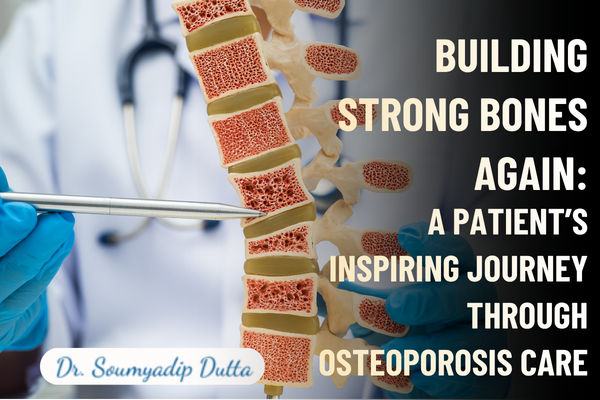
Osteoporosis is a condition in which bones gradually lose their density and strength, making them fragile and more likely to break even after minor falls or everyday activities.
Often called the “Silent Bone Disease,” osteoporosis usually develops without symptoms until the first fracture occurs.
Common fracture sites include:
- Wrist
- Hip
- Spine
- Shoulder
Early diagnosis and appropriate treatment play a vital role in preventing future fractures and maintaining independence.
Common Symptoms of Osteoporosis
Osteoporosis may not cause noticeable symptoms in its early stages.
As the condition progresses, patients may experience:
- Frequent fractures after minor injuries
- Back pain
- Loss of height
- Stooped posture
- Fragile bones
- Reduced mobility
- Hip or wrist fractures
Regular bone health screening is especially important for people at increased risk.
Who Is at Risk?
Several factors increase the likelihood of developing osteoporosis:
- Aging
- Postmenopausal women
- Family history
- Calcium deficiency
- Vitamin D deficiency
- Sedentary lifestyle
- Smoking
- Excessive alcohol consumption
- Long-term steroid use
Recognizing these risk factors allows earlier intervention.
The Emotional Impact of Fragile Bones
For Madhumita, the diagnosis affected more than her physical health.
She worried about:
- Falling again
- Losing her independence
- Becoming dependent on family members
- Future fractures
- Difficulty performing daily activities
Like many patients, she assumed weak bones were simply a normal part of aging.
Dr. Dutta reassured her that osteoporosis can often be effectively managed with early diagnosis, medication when indicated, nutrition, exercise, and regular follow-up.
Expert Bone Health Care with Dr. Soumyadip Dutta
Dr. Dutta believes osteoporosis treatment is about more than healing fractures—it is about preventing future ones.
His comprehensive approach includes:
- Detailed orthopedic evaluation
- Bone Mineral Density (DEXA) assessment
- Fracture risk evaluation
- Personalized treatment planning
- Medication when clinically appropriate
- Calcium and Vitamin D guidance
- Weight-bearing exercise recommendations
- Fall prevention strategies
- Long-term follow-up
Every treatment plan is individualized according to the patient’s age, bone health, lifestyle, and medical history.
Madhumita’s Personalized Osteoporosis Treatment Journey
After carefully reviewing her investigations, Dr. Dutta developed a comprehensive management plan.
Her Care Included:
- Orthopedic consultation
- Bone Mineral Density (DEXA Scan)
- Fracture management
- Osteoporosis medication where indicated
- Calcium and Vitamin D supplementation
- Nutritional counseling
- Weight-bearing exercise program
- Balance and fall-prevention training
- Regular follow-up assessments
The primary objective was to strengthen her bones, reduce fracture risk, and improve her overall quality of life.
Benefits of Early Osteoporosis Treatment
Timely diagnosis offers several important benefits.
Potential Benefits Include:
- Stronger bones
- Lower fracture risk
- Improved mobility
- Better balance
- Enhanced quality of life
- Greater independence
- Prevention of future bone loss
- Improved confidence in daily activities
Consistent treatment and healthy lifestyle habits play a key role in long-term bone health.
Recovery Journey: Strength Returned with Every Step
Over the following months, Madhumita faithfully followed her treatment plan.
She improved her diet.
She performed regular weight-bearing exercises.
She attended scheduled follow-up appointments.
Gradually, her confidence returned.
She no longer feared every step she took.
She resumed gardening, enjoyed walking again, and continued spending joyful moments with her grandchildren.
More importantly, she learned that osteoporosis could be managed successfully with expert care and healthy lifestyle changes.
Looking Toward a Stronger Future
Today, Madhumita continues her bone health program and remains committed to maintaining an active lifestyle.
She encourages friends and family to undergo bone health screening before fractures occur.
Her story reminds us that osteoporosis does not have to limit independence or quality of life.
Under the supervision of Dr. Soumyadip Dutta, timely diagnosis, personalized treatment, and preventive care transformed fragile bones into renewed confidence and healthier living.
Frequently Asked Questions (FAQs)
What is Osteoporosis?
Osteoporosis is a condition that weakens bones, making them more likely to fracture after minor injuries or falls.
Who is at risk for osteoporosis?
Older adults, postmenopausal women, people with a family history of osteoporosis, calcium or vitamin D deficiency, smokers, and individuals with sedentary lifestyles are at increased risk.
How is osteoporosis diagnosed?
Diagnosis usually involves Bone Mineral Density (DEXA) scanning, medical history, physical examination, and fracture risk assessment.
Can osteoporosis be treated?
Yes. Although lost bone cannot always be completely restored, medications, nutrition, exercise, calcium, vitamin D, and lifestyle modifications can strengthen bones and reduce fracture risk.
How can I prevent osteoporosis?
Maintain adequate calcium and vitamin D intake, exercise regularly, avoid smoking, limit alcohol consumption, and undergo bone health screening when recommended.
When should I consult an orthopedic specialist?
If you experience fractures after minor falls, persistent back pain, loss of height, or have significant osteoporosis risk factors, seek medical evaluation promptly.
Conclusion: Strong Bones Build a Stronger Future
Osteoporosis is often silent until the first fracture occurs, but early diagnosis and proper treatment can make a remarkable difference in preserving mobility and independence.
Under the expert supervision of Dr. Soumyadip Dutta, Consultant Orthopedic & Joint Replacement Surgeon, patients receive comprehensive osteoporosis care focused on fracture prevention, personalized treatment, bone strengthening, and long-term musculoskeletal health.
Madhumita’s inspiring journey reminds us that strong bones are built through timely medical care, healthy nutrition, regular exercise, and ongoing support. With expert orthopedic guidance and commitment to bone health, patients can continue enjoying active, confident, and fulfilling lives.
